
From Farm to Cup, With Nothing Hidden
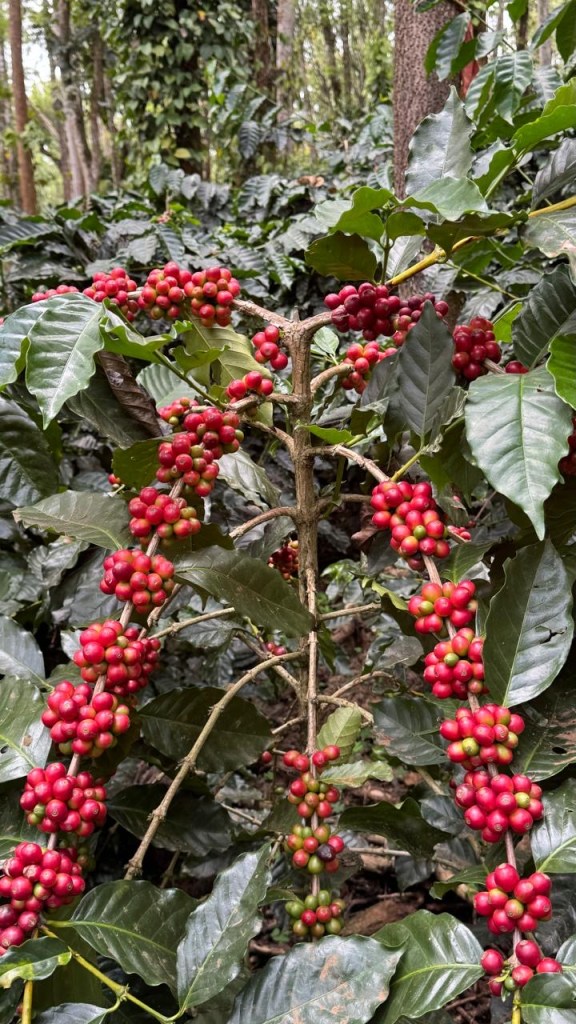
Every coffee we roast starts with a name, a place, and a story. We work directly with a small number of Indian growers whose beans we trust — and we roast in small batches, one at a time, to bring out exactly what each lot deserves.
Roasted With Intention, Not Guesswork
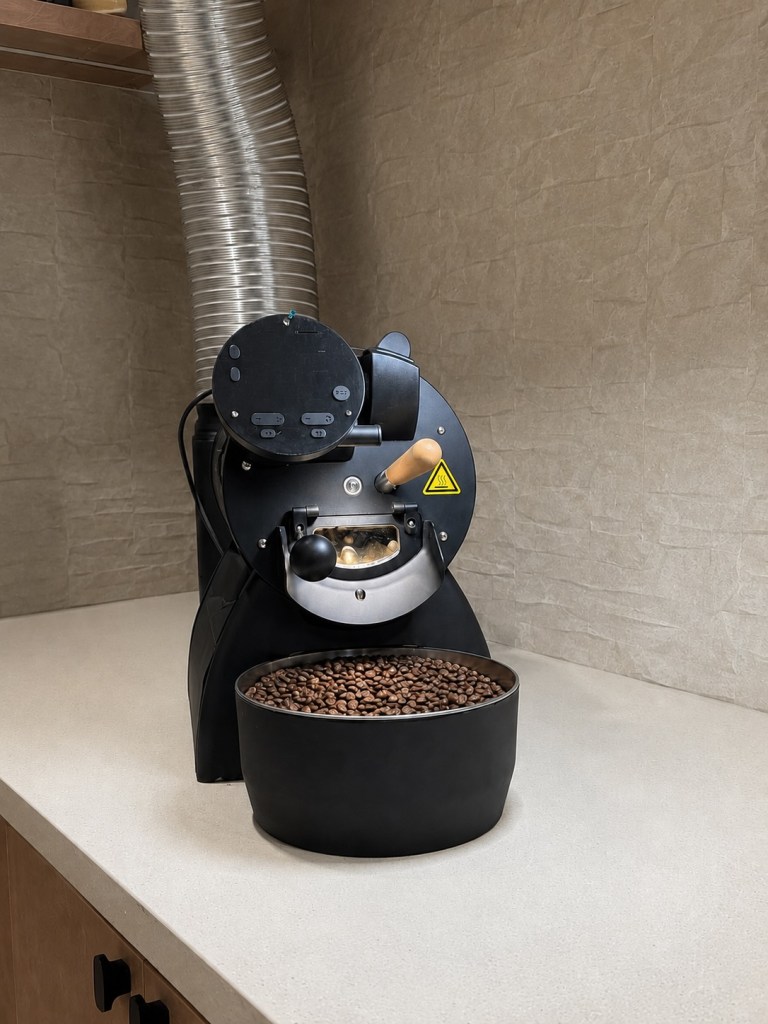
We roast every batch on an Aillio Bullet R2, a small-batch drum roaster that gives us precise control over heat and airflow — the two variables that matter most in bringing out a coffee’s true character.
Natural and washed coffees behave very differently on the roast floor. Naturals carry more surface sugar and need careful, more aggressive airflow early in the roast to avoid scorching. Washed coffees are more forgiving, rewarding a gentler approach that lets conductive heat build sweetness slowly. Our experimental lots — anaerobic naturals, sequentially fermented coffees — push these dynamics even further, and we adjust our profile for each one individually.
No two lots are roasted the same way. That’s deliberate.
Four Regions, One Standard
Chikmaglur, Karnataka
The birthplace of Indian coffee. High-altitude Arabica grown in the Baba Budangiri Hills, known for clean, structured cups with bright acidity.
Pulney Hills, Tamil Nadu
Cooler high-elevation terrain that produces coffees with excellent body and natural sweetness, often carrying subtle fruit-forward notes.
Koraput, Odisha
A tribal-farmed origin producing distinctive, small-lot coffees — a region still largely unexplored in India’s specialty coffee scene.
Araku Valley, Andhra Pradesh
A tribal-farmed region in the Eastern Ghats, known for shade-cultivated Arabica with a distinctly bright, expressive and layered cup.
Why the Process Matters as much as the Origin?
Washed
Cherries are pulped and fermented in water before drying, producing a clean, bright cup that lets the bean’s natural terroir shine through clearly.
Honey Processed
The cherry skin is removed, but some or all of the sticky mucilage layer is left on the bean during drying. Depending on how much mucilage remains, this produces a cup with more body and sweetness than washed coffee, while staying cleaner than a full natural — often with a rounded, honey-like sweetness that gives the process its name.
Natural
Whole cherries are dried intact, allowing sugars from the fruit to infuse the bean during drying. This produces heavier body, more fruit-forward sweetness, and sometimes wine-like complexity.
Experimental
Anaerobic fermentation, sequential fermentation, and other controlled techniques push flavor development further, often producing bold, unconventional cup profiles — funky, tropical, or intensely fruited, depending on the method.
We list the process on every product page because it genuinely changes how a coffee should be brewed and what to expect in the cup.